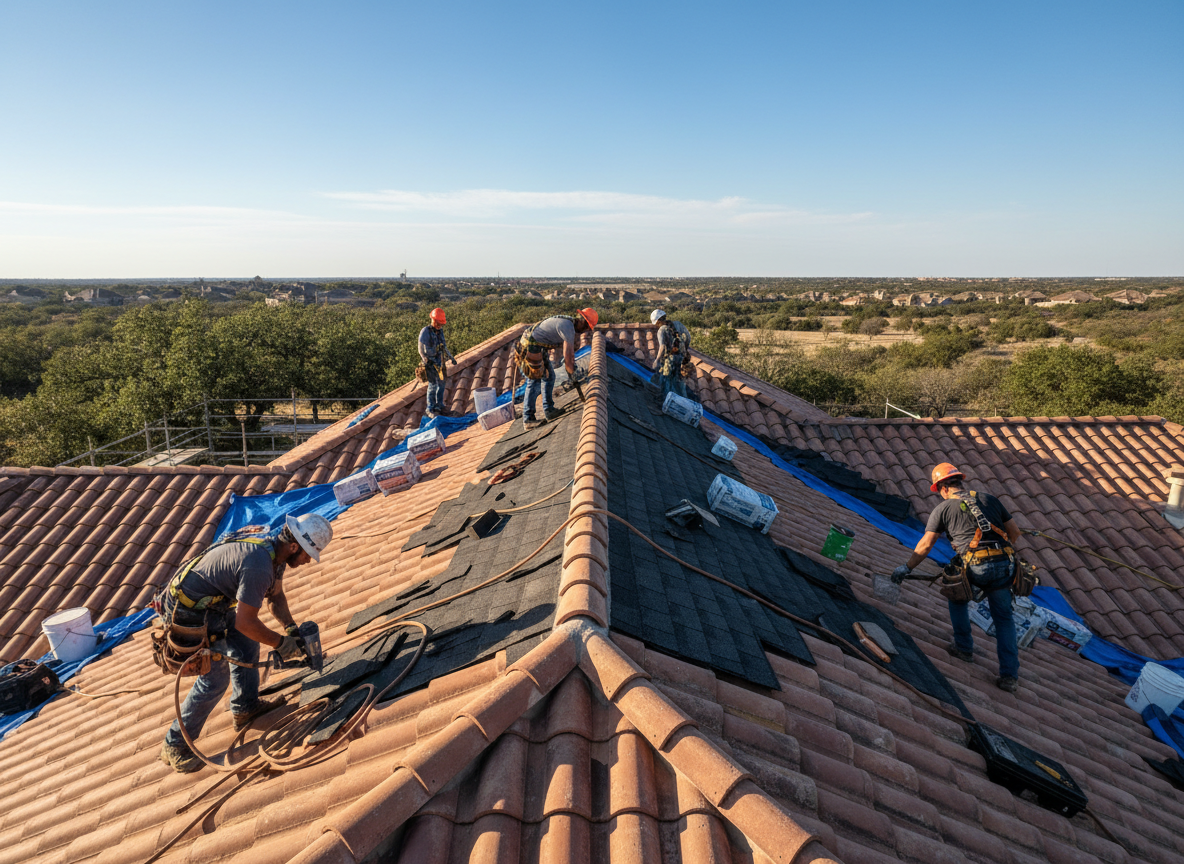
Roof Repair in Houston and Across Texas
Roof repair in Houston and across Texas is rarely just about replacing a missing shingle. In Harris County neighborhoods like the Heights, Montrose, River Oaks, Midtown, and Downtown, roofs face a subtropical climate with hot humid summers and mild winters, plus heavy rain, hail, and wind that test every flashing detail. The same conditions follow homeowners into Katy, Sugar Land, and Pearland, where newer subdivisions and older properties often need different repair approaches. Texas Roof Specialists is a statewide roofing service-connection brand that helps homeowners sort through roof repair needs, from a small leak near the Houston Zoo or Museum of Fine Arts to a low-slope membrane issue on a commercial building near Minute Maid Park or Space Center Houston. The goal is to diagnose the actual failure, explain repair versus replacement, and confirm local permit rules before work begins.
What Texas Heat, Humidity, Wind, and Hail Do to Roofs
Texas roofs live under a combination of UV intensity, heat, humidity, wind-driven rain, and hail that wears materials differently than in milder climates. Asphalt shingles can curl, crack, and lose granules as attic temperatures rise; metal expands and contracts, loosening fasteners and stressing sealants; tile can crack or slip, exposing underlayment that may already be aged. In Houston's subtropical climate, humidity also matters because small leaks can feed attic mold and rot before a ceiling stain appears. Heavy rain finds weak points at valleys, pipe boots, chimney flashing, and wall transitions, while hail can bruise shingles or dent metal without immediately looking dramatic. A repair that only covers the visible damage often misses the water path, which is why diagnosis should include the attic, penetrations, and roof-to-wall details.
Repair or Replace? Factors That Change the Decision
The choice between roof repair and roof replacement depends on age, extent, and whether the roof system can still shed water as a whole. A localized leak at a vent boot, cracked tile, or damaged flashing may be a straightforward repair if surrounding materials are sound. Widespread granule loss, multiple active leaks, saturated underlayment, soft decking, or hail bruising across many slopes usually points toward replacement. Matching existing materials also matters: discontinued shingles, tile profiles, or metal panels can make a small repair look patchy, and layered roofing may limit how much can be repaired without tearing down to the deck. Future plans matter too. If you are selling soon, a focused repair may be enough; if you plan to stay through more Texas storm seasons, replacing compromised sections can be the more durable path.
Roof Systems and Materials We Repair
Different roof systems fail in different ways, so the repair approach should match the material. Asphalt shingle roofs are common across Houston and Texas, and repairs often involve replacing bruised or missing shingles, restoring underlayment, and sealing penetrations. Metal roofs need fasteners and panels that allow thermal movement; repairs may address backed-out screws, dented panels, rust at cut edges, or failed sealants. Tile roofs can last decades, but the underlayment and flashing often fail first, so repairing only cracked tiles may not stop a leak. TPO and flat/low-slope systems are common on commercial buildings, additions, and modern homes; seam, drain, and penetration repairs must use compatible membrane details. Coatings and waterproofing can extend a sound low-slope or metal roof, but they are not appropriate over saturated insulation, active rot, or failed seams.
Symptoms That Mean You Need Roof Repair
Watch for ceiling stains, damp attic decking, granules in gutters, lifted or missing shingles, cracked tile, rusted metal panels, and daylight visible through the roof deck. In Houston, a musty attic smell after heavy rain can point to a small leak that has been running for weeks. Exterior symptoms include loose flashing, damaged pipe boots, sagging gutters, and water streaks on walls near chimneys or valleys. After hail or high wind, check for bruised shingles, dented vents, and displaced ridge caps. If you see multiple symptoms across different slopes, ask whether roof replacement is more practical than repeated repairs.
How We Diagnose Roof Problems
Diagnosis starts with the reported symptom, but it should not stop there. A roof repair professional should inspect the roof surface, attic where accessible, penetrations, valleys, wall transitions, and drainage paths. Moisture checks can help separate an active leak from an old stain. In low-slope systems, seams, drains, and HVAC curbs deserve close attention because water can travel far from the entry point. For tile and metal roofs, the underlayment and fasteners may be the real issue even when the visible surface looks intact. A written diagnosis should explain what failed, why it failed, and what repair scope will address it.
Permits and Local Rules
Permit rules vary by municipality and by job scope. A City of Houston permit may be required for certain structural, decking, or re-roof work, while Katy, Sugar Land, Pearland, and other jurisdictions set their own thresholds. Minor repairs may not require a permit, but it is the homeowner's responsibility to confirm with the local building department for the specific address. Homeowners associations in neighborhoods like River Oaks, the Heights, or Montrose may also have design or material rules. Confirm permit and HOA requirements before work begins so the repair does not create a compliance problem later.
What to Discuss With Your Roofing Contractor
Ask how the leak or damage was traced, not just what will be replaced. Request a written scope that separates labor, materials, and disposal. Discuss whether the repair is intended as a permanent fix or a temporary measure until replacement. Confirm how existing shingle, tile, metal, or membrane materials will be matched. Ask about decking and underlayment conditions, because hidden rot can change the job. Clarify who will pull any required permit and how inspections will be handled. Discuss cleanup, nail sweeps, and how the work will be protected if weather changes. Finally, ask what areas should be monitored after the repair.
Cost Factors for Roof Repair
Roof repair pricing depends on roof size, pitch, access, material, and the extent of hidden damage. A small flashing or vent boot repair is usually less involved than replacing a valley, matching discontinued tile, rebuilding a low-slope membrane section, or replacing rotted decking. Height, steepness, landscaping, and the need for staging or lifts can add labor. Disposal fees and material lead times matter, especially for tile and metal profiles. Permits, if required by the local municipality, can also affect the total. Ask for a written scope that separates labor, materials, and disposal so you can compare repair options clearly.
Preventing Repeat Roof Repairs
Keep gutters and downspouts clear so water does not back up under roof edges. Trim tree limbs away from the roof to reduce abrasion and debris. After storms, check for lifted shingles, cracked tile, dented metal, and displaced flashing. Address small leaks early, because Houston humidity can turn a minor drip into decking rot and attic mold. Avoid walking on tile or older shingle roofs unnecessarily. Schedule periodic roof checkups, especially before and after storm season. If a repair has failed more than once in the same area, ask whether the underlying detail, not the patch, is the real problem.
What Roof Repair Is Often Confused With
Roof repair is often confused with roof replacement, roof maintenance, and coating work. Maintenance includes cleaning, minor sealing, and preventive checks; repair addresses a specific failure such as a leak, damaged flashing, or storm-damaged material. Replacement removes and rebuilds larger sections or the entire roof system. Coatings and waterproofing can extend a sound low-slope or metal roof, but they are not a substitute for repairing active leaks, saturated insulation, or failed seams. Knowing which category your roof falls into helps you ask better questions and avoid paying for a scope that does not match the problem.
Technician insight
In Houston, the thing that catches most people out with roof repair is that a ceiling stain in a Heights bungalow or a Montrose townhome often shows up far from the actual breach. Driving rain during a subtropical downpour can push water sideways through flashing, pipe boots, or a small shingle gap, then it runs along decking before dripping inside. Homeowners often want the interior stain patched first, but the real fix is tracing the water path from the attic, valleys, and penetrations. In older River Oaks and Heights homes, original decking and layered roofing can also change whether a spot repair will hold or whether a wider section needs to come apart.
Recurring Leak at a Heights Bungalow Addition
A 1950s Heights bungalow had a recurring damp patch near a rear addition after heavy spring rain. We found the leak originated at a corroded vent boot and failed step flashing where the addition met the original roofline, not at the shingles above the stain. We replaced the boot, rebuilt the step flashing, sealed the transition, and checked the attic after the next storm. The ceiling stain stopped spreading and the homeowner avoided a full roof replacement.
Roof Repair Services We Offer
✓Asphalt Shingle Roof Repair
Repair for lifted, cracked, missing, or hail-bruised shingles, plus underlayment and decking issues beneath them. Common in Houston-area pitched roofs where heat, wind-driven rain, and tree debris shorten shingle life.
✓Metal Roof Repair
Fixes for loose fasteners, dented panels, failed sealants, flashing leaks, and rust at cut edges or penetrations. Metal can suit Texas heat and hail better than some materials, but repairs must allow for expansion and contraction.
✓Tile Roof Repair
Repair for cracked, slipped, or broken clay and concrete tiles, plus the underlayment and flashing that actually keep water out. Tile roofs can last a long time, but the underlayment often ages out first in Texas UV and heat.
✓TPO and Flat Roof Repair
Membrane repair for TPO and other low-slope systems used on commercial buildings, additions, and modern homes. We trace seam, drain, and penetration leaks and repair with compatible membrane details rather than patching blindly.
✓Roof Coating and Waterproofing
Elastomeric or reflective coatings and waterproofing details for compatible low-slope and metal roofs. Coatings can extend a sound roof's service life, but they are not a cure for saturated insulation, active deck rot, or failed membrane seams.
✓Storm and Hail Damage Roof Repair
Targeted repairs after hail, high wind, or heavy rain, including bruised shingles, cracked tile, dented metal, and displaced flashing. We separate isolated damage from widespread compromise so you can compare repair against roof replacement.
✓Roof Flashing and Vent Repair
Repair for leaks at chimneys, walls, valleys, pipe boots, skylights, and HVAC curbs. These details are common leak points in Houston's intense rain, and they often fail before the field shingles do.
How it works
- 1
Roof Assessment and Leak Tracing
We inspect the roof surface, attic, penetrations, valleys, and flashing to find the source rather than only the stain. In Houston's humidity, we also check for trapped moisture and decking soft spots.
- 2
Repair Scope and Material Matching
You receive a written scope describing what will be repaired, what material will be used, and what is excluded. Matching existing shingle, tile, metal, or membrane profiles matters for appearance and performance.
- 3
Permit and Municipal Confirmation
Permit rules vary by municipality and by job scope. We help identify when a City of Houston, Katy, Sugar Land, Pearland, or other local permit may be required, but the homeowner or contractor should confirm with the local building department.
- 4
Repair Execution and Flashing Details
Crews remove damaged material, repair decking or underlayment as needed, and rebuild flashing, valleys, and penetrations. The goal is to restore drainage and water shedding, not just cover the visible damage.
- 5
Final Inspection and Homeowner Walkthrough
We review the completed repair, check attic areas where accessible, and walk through what was done. You get notes on remaining risk, maintenance, and whether any areas should be monitored for roof replacement.
Pricing
Roof repair pricing in Texas depends on roof size, pitch, material, access, extent of decking or underlayment damage, flashing details, and whether permits are required. A small shingle or flashing repair is usually a smaller line item, while widespread hail bruising, tile breakage, or low-slope membrane work can approach replacement-level costs. Ask for a written scope that separates labor, materials, and disposal.