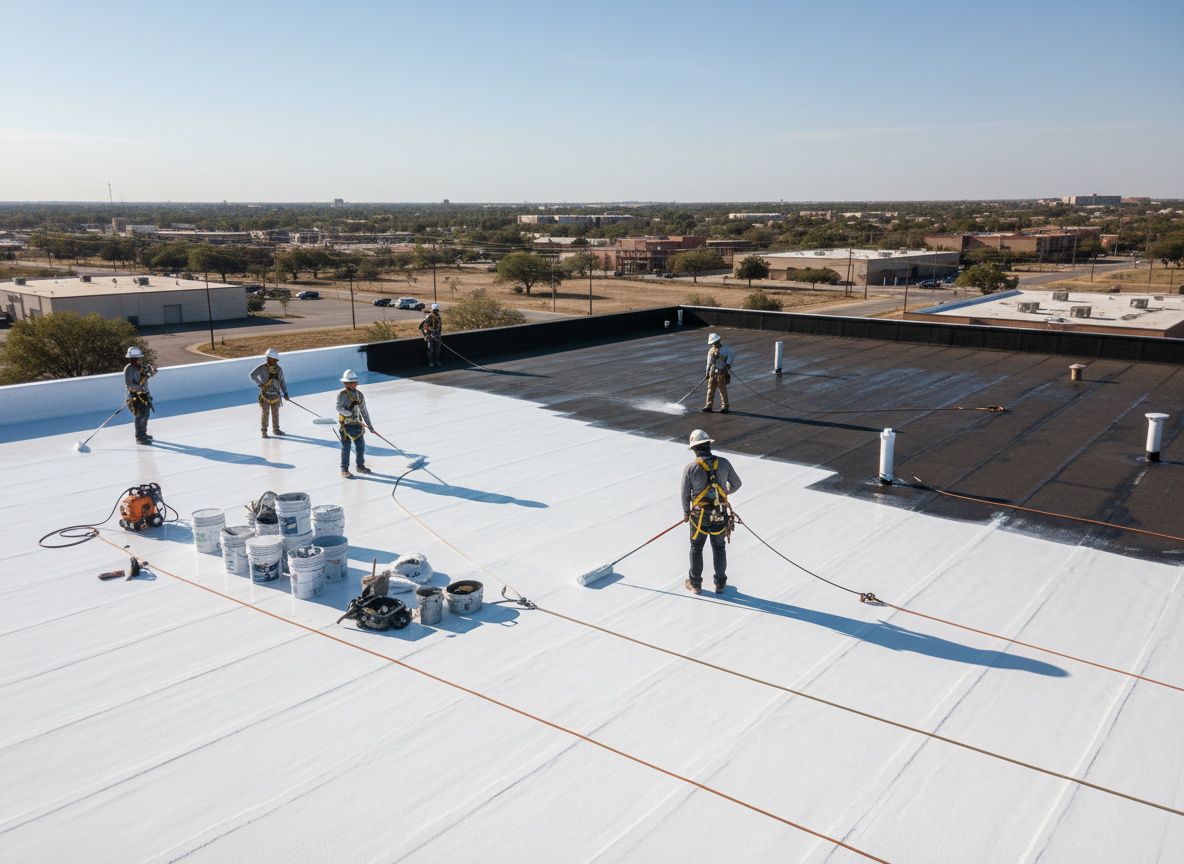
Roof Coating in Houston: A Practical Alternative to Replacement
Roof coating is a fluid-applied membrane that seals and protects an existing roof surface. In Houston's subtropical climate—hot, humid summers and mild winters—it's often used to extend the life of flat and low-slope roofs on homes in the Heights, Montrose, and River Oaks, as well as commercial buildings Downtown and near Minute Maid Park. Instead of tearing off a sound substrate, a coating can bridge minor cracks, reflect UV rays, and reduce heat gain. It's not a cure-all: if the roof structure is saturated or the deck is failing, roof replacement is the safer path. But for many property owners from Katy to Sugar Land and Pearland, a properly applied coating buys years of service at a fraction of replacement cost.
How Houston's Subtropical Climate Tests Roof Coatings
Houston's climate is hard on roofs. Summer UV can degrade asphalt and single-ply membranes, while humidity and heavy rain from Gulf storms push water into every seam. Hail events can bruise shingles and dent metal, and wind-driven rain finds failed flashings. A roof coating formulated for Texas conditions must resist UV chalking, remain flexible in heat, and handle ponding water that often forms on low-slope roofs near the Museum of Fine Arts or in Midtown. Acrylic coatings are common but can re-emulsify in standing water; silicone and polyurethane coatings offer better ponding resistance. After a storm, inspect for punctures and lifted seams before coating—trapped moisture will blister the new membrane. Local permits can vary by municipality and should be confirmed for the job.
Matching the Coating to the Roof System
Not every roof takes the same coating. Modified bitumen and built-up roofs often accept acrylic or silicone coatings after proper cleaning and primer. TPO and EPDM membranes may need specific primers to achieve adhesion; some coatings are not compatible with plasticizers in older EPDM. Metal roofs—common on commercial buildings near Space Center Houston and industrial pockets along the Ship Channel—benefit from elastomeric or silicone coatings that seal seams and inhibit rust. Asphalt shingle roofs are rarely coated because granules and slope make adhesion difficult, though some reflective shingle coatings exist. Tile roofs typically aren't coated; their failure is usually underlayment or flashing. Flat roofs with ponding water need a coating rated for immersion, like high-solids silicone. Always confirm the coating manufacturer approves the substrate.
Diagnosis and Inspection: What a Contractor Should Check
A roof coating job starts with a thorough inspection, not a sales pitch. A qualified contractor should check for active leaks, ponding water, blisters, and seam separation. They may perform a moisture survey using infrared or capacitance meters to find saturated insulation. Core cuts can confirm the substrate condition. Adhesion tests—peeling back a small sample—reveal whether the existing surface is compatible. Drainage is critical: if water stands for more than 48 hours after a rain, a coating alone won't solve the problem. Flashing details at walls, vents, and drains must be sound before coating. In older Houston neighborhoods like the Heights, original low-slope porch roofs often have multiple layers, which can affect coating choice. Ask for a written scope that includes prep, primer, and number of coats.
Common Failure Modes and Symptoms That Call for Coating
Roof coatings can fail in predictable ways. Chalking and fading signal UV breakdown. Blistering often means moisture is trapped beneath the surface. Peeling at edges or seams points to poor adhesion or incompatible substrate. Ponding water can re-emulsify acrylic coatings, causing them to wash away. Rust streaks on metal roofs show coating has worn thin. On modified bitumen, alligatoring and surface cracks can be bridged by a flexible coating if the membrane is still sound. If you see soft spots, sagging, or widespread cracking, coating may be a temporary patch at best. Symptoms that coating can address: minor surface cracks, UV degradation, seam hairline cracks, and reflective heat gain. Symptoms that require repair or replacement first: active leaks, saturated insulation, structural sag, and widespread membrane failure.
Repair vs. Replacement: Factors to Weigh
The decision between coating and replacement hinges on the roof's remaining life and condition. If the roof is less than half its expected service life and the substrate is dry and sound, a coating can be a cost-effective extender. If the roof is near the end of its life, has multiple layers, or has saturated insulation, replacement is usually more reliable. In Houston, hailstorms can total a roof; coatings won't fix hail damage. Wind uplift can tear coatings at edges if termination details are weak. Heavy rain and poor drainage accelerate failure. For commercial low-slope roofs, a coating may be appropriate when the building owner needs to defer capital expense, but only if a moisture survey confirms no saturation. For residential steep-slope roofs, coating is rarely the right answer. Always get a professional assessment.
What to Discuss with Your Contractor
Before you commit to a roof coating, discuss these points with your contractor:
- Substrate compatibility and manufacturer approvals for your specific roof membrane.
- Surface preparation: power washing, patching, primer, and how seams and flashings will be treated.
- Number of coats and dry mil thickness required for the warranty or performance target.
- Ponding water: how drainage will be improved if water stands after rain.
- Moisture survey results: any saturated insulation must be removed, not coated over.
- Local permits: requirements vary by municipality (Houston, Katy, Sugar Land, Pearland) and should be confirmed for the job.
- Weather windows: coating application needs dry conditions and proper curing temperatures.
- RCAT certification: if the product requires an RCAT-certified applicator, ask to verify the assigned crew holds that credential.
- Warranty terms: what the manufacturer covers and what the contractor covers.
- Project timeline and cure time before foot traffic or rain.
Cost Factors for Roof Coating in Texas
Roof coating costs vary widely based on roof size, substrate, and preparation. A simple acrylic coating on a clean, dry modified bitumen roof costs less than a high-solids silicone system on a roof with ponding water and rusted metal. Factors include: square footage, number of coats, surface prep (patching, priming, power washing), accessibility (height, obstacles like HVAC units), removal of saturated materials, and local permit fees. Roofs in Downtown Houston or near the Museum of Fine Arts may have complex access and staging costs. Homes in Katy, Sugar Land, and Pearland often have straightforward low-slope sections but may need drainage improvements. Expect to pay more for coatings that carry longer manufacturer warranties or require specialized applicators. Get a written scope with line items for prep, materials, and labor.
Technician insight
In Houston, the thing that catches most people out with Roof Coating is assuming a single coat will fix ponding water. Our clay soils shift, and older Heights and Montrose homes often have low-slope porch roofs that drain poorly. If the deck isn't properly sloped or the existing coating is blistering from trapped moisture, a new coating will peel within a season. We always check for saturation before recommending a recoat.
Recoating a Midtown Low-Slope Roof After Ponding
A homeowner near Midtown called about a leaking flat roof over a rear addition. We found ponding water and a failed acrylic coating that had blistered, trapping moisture in the modified bitumen. After cutting out the saturated section, we repaired the substrate, added a tapered edge for drainage, and applied a silicone coating system. The roof has stayed dry through subsequent storm seasons.
Roof Coating Services We Offer
✓Reflective Cool Roof Coating
A white or light-colored coating that reflects UV and reduces heat gain on low-slope roofs. Common on commercial buildings and flat-roof additions in Houston's hot climate.
✓Elastomeric Roof Coating
A flexible rubberized coating that bridges hairline cracks and seals minor seams. Suitable for metal roofs and sound modified bitumen.
✓Silicone Roof Coating
A high-solids coating that resists ponding water and UV degradation. Often specified for flat roofs that stay wet after rain.
✓Metal Roof Coating
Seals seams, inhibits rust, and refreshes metal roofs on commercial and industrial buildings. Requires proper surface prep to bond.
✓Flat and Low-Slope Roof Coating
Restores BUR, modified bitumen, and TPO membranes when the substrate is dry and structurally sound. Includes seam reinforcement and flashing detail.
✓Roof Coating Repair and Rejuvenation
Recoating or repairing an existing coating that has chalking, peeling, or worn areas. Extends the life of a previous application if adhesion is intact.
How it works
- 1
Inspection and Moisture Assessment
We start with a full roof inspection, including a moisture survey if needed, to confirm the substrate is dry and sound. We check drainage, flashings, and existing coating adhesion.
- 2
Surface Preparation and Repairs
The roof is cleaned, loose material removed, and any blisters or cracks are patched. Primer is applied where the manufacturer requires it. Ponding issues are addressed before coating.
- 3
Coating Application
The coating is applied at the specified thickness, often in multiple coats. Seams, flashings, and penetrations receive reinforcement fabric or extra coating.
- 4
Curing and Final Inspection
We allow proper cure time, then inspect the finished membrane for pinholes, thin spots, and adhesion. You receive a written scope of what was done.
Pricing
Roof coating pricing depends on roof size, substrate, prep work, coating type, number of coats, and local permit fees. A simple acrylic recoat costs less than a high-solids silicone system on a roof with ponding water. Request a written scope with line items for prep, materials, and labor.