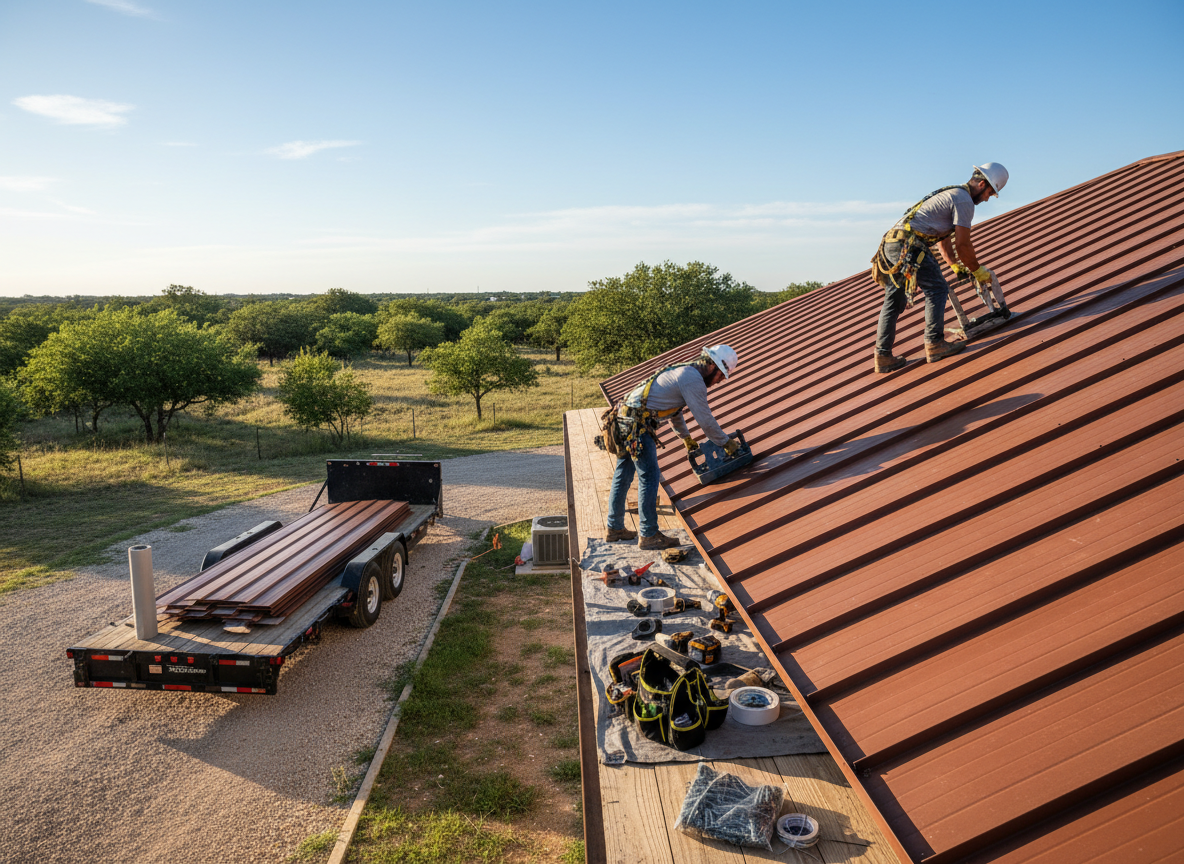
Metal roofing has become a popular choice across Texas, and for good reason: it sheds heavy rain, reflects the sun's heat, and can last decades. But metal roofs are not maintenance-free, especially in a subtropical climate with hot humid summers, mild winters, and the occasional freeze. In Houston's historic neighborhoods like the Heights and Montrose, older metal roofs often show their age through rusted seams, loose fasteners, and failing sealants. In newer suburbs like Katy, Sugar Land, and Pearland, hail and wind-driven rain can dent panels, back out screws, and compromise the weather seal. If you are hearing rattling during storms, seeing rust streaks, or finding water stains on your ceiling, it is time to have a professional assess the metal roof. Roof repair on metal systems requires specific tools and knowledge — not every roofer works on metal, so choosing the right contractor matters.
Metal roof repair is not a one-size-fits-all task. The right approach depends on the metal type (standing seam, corrugated, metal shingle, stone-coated steel), the panel profile, the fastening method (exposed vs. concealed), and the age of the roof. For example, a standing seam roof with concealed clips may need panel re-securing or seam tightening, while a corrugated roof with exposed fasteners may need screw replacement with larger, neoprene-washered screws. In Houston, where humidity stays high, rust is a common enemy — especially on older, lower-grade metal roofs. Coastal areas can see salt air accelerate corrosion. Meanwhile, hail events in North Texas and the Hill Country can dent panels and knock protective coatings loose. A proper repair starts with a thorough inspection to identify the root cause, not just the symptom. That means checking panel seams, fastener gaskets, flashings, valleys, and penetrations. It also means looking at the underlayment and decking, which can be damaged by years of small leaks.
When it comes to metal roof repair versus replacement, several factors come into play. If the roof is relatively young (under 15–20 years) and the damage is isolated — a few loose panels, a small rust spot, or a failed pipe boot — repair is often the sensible choice. But if the roof is older, has widespread rust, multiple leaks, or has been through a major hail event with dented panels across the field, replacement may be more cost-effective in the long run. Metal roofs can sometimes be repaired by overlaying a new metal roof, but that depends on local building codes and the condition of the existing structure. In Texas, permits for roofing work vary by municipality — the City of Houston, Katy, Sugar Land, and Pearland each have their own requirements, so it is important to confirm what is needed for your specific job. A reputable contractor will pull the necessary permits and schedule inspections.
Texas weather is hard on roofs. The state sees intense UV radiation, high heat, heavy rain, hail, and occasional high winds from thunderstorms and hurricanes. Metal roofs are designed to handle these conditions, but they can still suffer damage. UV can degrade sealants and paint over time, leading to rust. Thermal expansion and contraction can cause fasteners to back out and seams to loosen. Hail can dent panels and compromise the protective coating, making the metal more susceptible to rust. Wind can lift panels if they are not properly secured. Heavy rain can find its way into any gap. That is why regular inspections — especially after major storms — are key. If you notice any of the symptoms above, it is best to have a professional take a look. Early repair can prevent small issues from becoming major ones. And when it is time for a repair, make sure the contractor uses compatible materials and follows the manufacturer's guidelines to avoid voiding any remaining warranty.
Technician insight
In Houston, the thing that catches most people out with metal roof repair is that the leak they see inside is rarely right below the actual breach. On metal roofs, water can travel along the panel ribs, seams, or purlins and show up feet away. I've seen homeowners pay to replace a whole panel when the real culprit was a single failed pipe boot flashing or a backed-out screw uphill. Also, our humidity means rust spreads faster than folks expect — a small rust spot on a panel in Montrose can turn into a pinhole leak within a season if not treated. So don't just patch the stain on the ceiling; get the whole roof looked at by someone who understands metal.
Chasing a Ceiling Stain to a Loose Fastener in the Heights
A homeowner in the Heights called us about a water stain on their living room ceiling after a heavy rain. The metal roof was about 12 years old. We inspected and found that the leak was not directly above the stain; it was coming from a loose fastener about 10 feet uphill. Water was traveling along a panel rib and dripping down. We replaced the fastener, resealed the seam, and treated a small rust spot nearby. The leak stopped, and the homeowner avoided a full panel replacement.
Metal Roof Repair Services We Offer
✓Metal Roof Leak Repair
Locate and fix leaks in metal roofing systems, whether caused by failed sealants, loose fasteners, or damaged panels. We address the source, not just the symptom.
✓Rusted Metal Panel Repair
Treat and repair rusted metal panels, including spot rust and widespread corrosion, to extend the life of your roof. Options include cleaning, priming, and recoating or panel replacement.
✓Loose or Missing Fastener Repair
Re-secure or replace backed-out screws and fasteners that can cause leaks and panel movement. We use proper neoprene-washered fasteners to match your roof.
✓Hail Dent and Damage Repair
Repair or replace metal panels dented by hail, and address compromised coatings that can lead to rust. We assess the extent of damage to determine the best course.
✓Metal Roof Flashing Repair
Fix or replace damaged flashing around chimneys, vents, and valleys, a common source of leaks in metal roofs. Proper flashing is critical for a watertight seal.
✓Metal Roof Panel Replacement
Replace individual damaged or severely rusted metal panels to restore the roof's integrity and appearance. We match profile and color as closely as possible.
✓Metal Roof Seam and Sealant Repair
Re-seal open seams and apply high-quality sealant to prevent water intrusion. This is often needed as sealants age and crack in Texas heat.
How it works
- 1
Inspection and Diagnosis
A roofing professional inspects your metal roof, checking for leaks, rust, loose fasteners, damaged panels, and flashing issues. They may also inspect the attic for signs of water intrusion.
- 2
Repair Plan and Estimate
Based on the inspection, the contractor provides a detailed repair plan and an upfront estimate. They explain what needs to be done and why, and discuss options if replacement is more appropriate.
- 3
Permitting (If Required)
If your municipality requires a permit for the repair, the contractor will pull it. Permit requirements vary by city, so this step ensures compliance with local codes.
- 4
Repair Work
The crew performs the repair, which may include replacing fasteners, sealing seams, treating rust, or replacing panels. They use materials compatible with your metal roof.
- 5
Final Inspection and Cleanup
After the repair, the contractor inspects the work to ensure it is watertight and meets quality standards. They clean up the site and provide any necessary documentation.
Pricing
Metal roof repair costs in Texas vary based on the extent of damage, roof accessibility, and materials. Minor repairs like resealing a few seams may be a few hundred dollars, while replacing multiple panels or addressing widespread rust can run into the thousands. We provide upfront quotes after inspection, so you know the cost before work begins.